

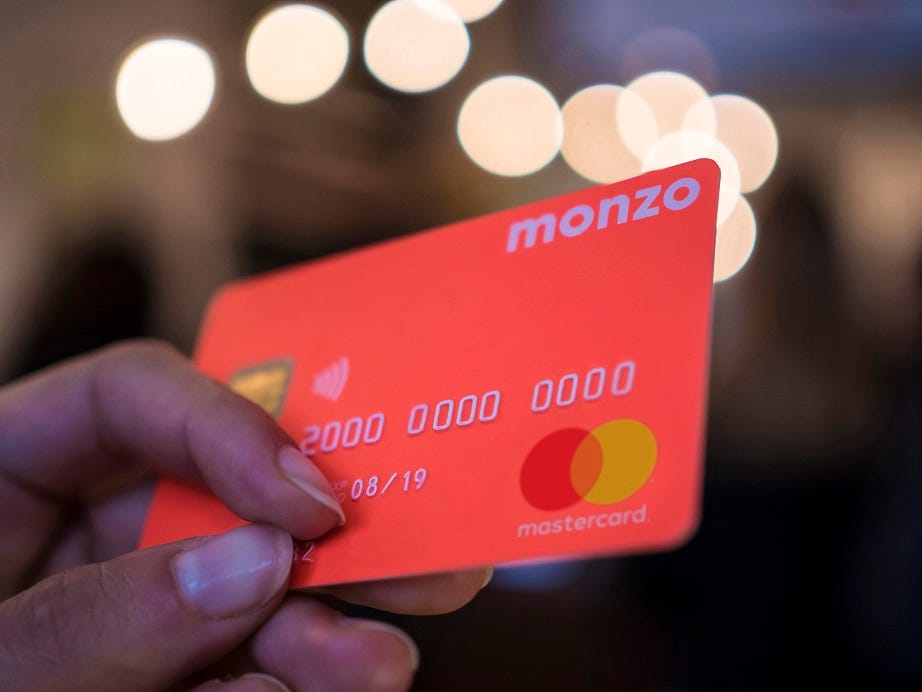
Monzo's signature hot coral - the iconic bright-orange bank card - was never meant to be coral. It was a temporary colour, picked while the team was still prototyping. To their surprise it turned out to be a user favourite, so it stayed.
That's Monzo's early years in a nutshell. The company kept “outsourcing” a lot of their brand decision making to their customers.
Where it started. In 2015 a small team launched a prepaid card and an app called Mondo. The first test was capped at 3,000 users. Customers got a "Golden Ticket" to pull a friend past the waitlist, and founder Tom Blomfield says those tickets drove about 40% of 2017 signups. In February 2016, 1,861 fans invested £1 million in the company on Crowdcube. It sold out in 96 seconds.
Then a company with a similar name challenged the trademark, so in 2016 Mondo asked its fans to rename it. They sent in about 12,000 ideas, 52 of them some version of "Banky McBankface". Five people suggested Monzo. They got the first cards.
Blomfield says the bright card started conversations and made customers feel part of something. By September 2018 Monzo had a million customers, "without having spent any significant money on marketing".
The turn: from friends to the living room. Word of mouth only reaches friends of customers. In May 2024 Monzo ran its first big TV campaign in five years, "Money Never Felt Like Monzo", with the agency Uncommon. It took the feelings money gives you and flipped them. Arguments turn into hugs. A tarantula becomes a head massager. Monzo said its customers were seven times more likely to use the word "love" about it than about any other bank.
Smaller, cheekier moves followed. In January 2026 it sold Coventry City away shirts for 1p in two one-day pop-up shops, to make the point that a penny a day adds up.
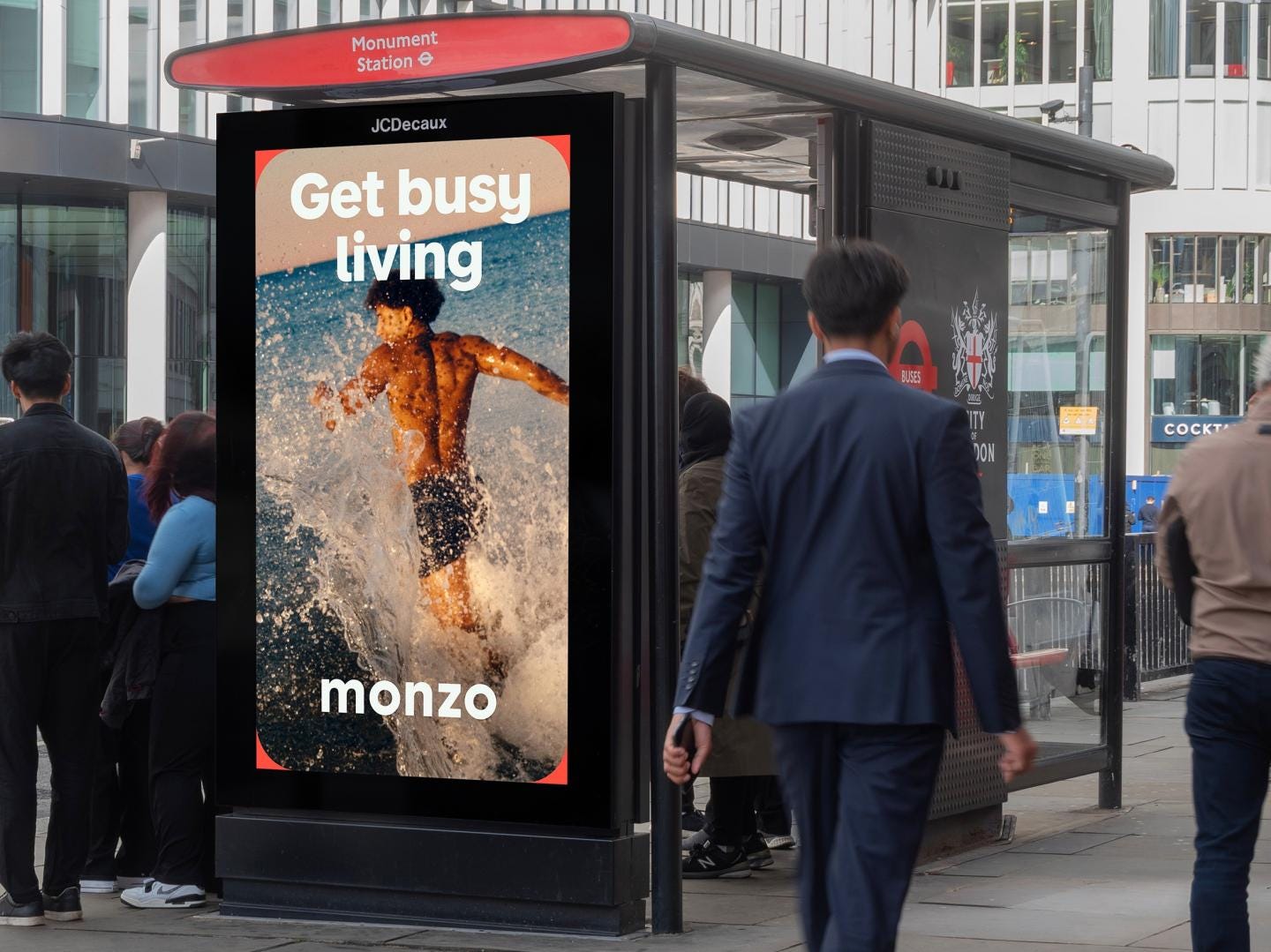
The after: the bank moves to the corner. On 27 July 2026 Monzo launched "Get busy living", its first global brand platform, with BBH. Ten single-shot films, narrated by Olivia Colman. A couple sneaking home after date night. A dad making his daughter laugh at bath time. Monzo sits quietly in the corner of the frame while life happens. The homepage says it in one line: "Spend your money on life, not your life on money." There's even a first sound logo, built from the "mmm", "zzz" and "ooo" in the name.
Early signs look good. UK data from brand tracker Tracksuit, published in October, puts Monzo's prompted awareness around 80% since December 2025, and 25.3% of people prefer it, against 22.7% for Revolut. Tracksuit says it's too early to credit the new campaign.
The coral stayed. So did a tone that makes money feel lighter, never scarier.
Why it worked
Customers made the early choices: the colour, the name, who got in next. People defend what they helped build, which is probably one reason it stuck.
One recognisable visual asset, kept for ten years. The placeholder colour became the thing people recognise in a wallet.
It sells a feeling about money. Joy instead of dread in 2024, time back in 2026. The features are there, just in the corner.
The personality survived the scale-up. A 1p football shirt is as cheeky as Banky McBankface, likely why a much bigger Monzo still feels like Monzo.
My take
While Cash App went for cool, flashy swagger, Monzo wins people over by acting like an honest, friendly companion. One that just wants to make money less stressful for you.
They talk to their users in plain English. They let them stash cash in simple budgeting “Pots”. And they handed out bright coral debit cards that practically advertised themselves every time someone bought a coffee.
What many great brand stories have in common, and what Monzo made look so easy, is treating customers like partners.
That’s what you can steal. Involve your OG users in building the brand. Make the process the campaign. Ask for feedback on new features, let them name one, let them pick the colour of your card.
Make the product the centre of your marketing, make brand building participatory... and your customers will handle the marketing for you.
AI in brand work: the so-what ladder
Monzo's homepage doesn't lead with Pots. It leads with life. That's what's left after you ask "so what?" enough times. Try this, 30 minutes.
Write down your most-used feature, plainly. "Salary sorted into Pots."
Ask your AI tool to interview you, one question at a time: "So what does that give the customer?" Five rounds. Tell it to push back whenever your answer is still a feature.
Paste in 30 real customer reviews, personal data removed. Ask which rung of your ladder customers reach in their own words, with a quote each.
Take the highest rung real quotes support. Ask for 15 everyday scenes where that feeling shows up and your product isn't the hero.
Most ladders stop at rung two. That's where the brand work starts.
That's issue #4.
Next time: another fintech, another look at why it grew. If someone on your team should read this, forward it. Got a brand you want analysed? Hit reply.
Imo
Sources
"Monzo is winning the fame game", Famous Campaigns (Tracksuit partner post), 7 Oct 2026: link
"Monzo launches first global brand platform", Marketing Week, 27 Jul 2026: link
"Olivia Colman narrates Monzo's global brand platform launch", Creative Review, 28 Jul 2026: link
"Monzo runs first TV ad in five years and highlights positive thinking", The Drum, 13 May 2024: link
"Monzo score with 1p kit stunt for Coventry fans", Famous Campaigns, 22 Jan 2026: link
"Monzo Growth", Tom Blomfield, 31 Jul 2022: link
"Mondo Team Reveals Top 10 Potential Names After Rebranding to Monzo", Crowdfund Insider, 29 Aug 2016: link
Monzo, Wikipedia (coral card, rename): link
Monzo homepage, accessed 19 Oct 2026: link